


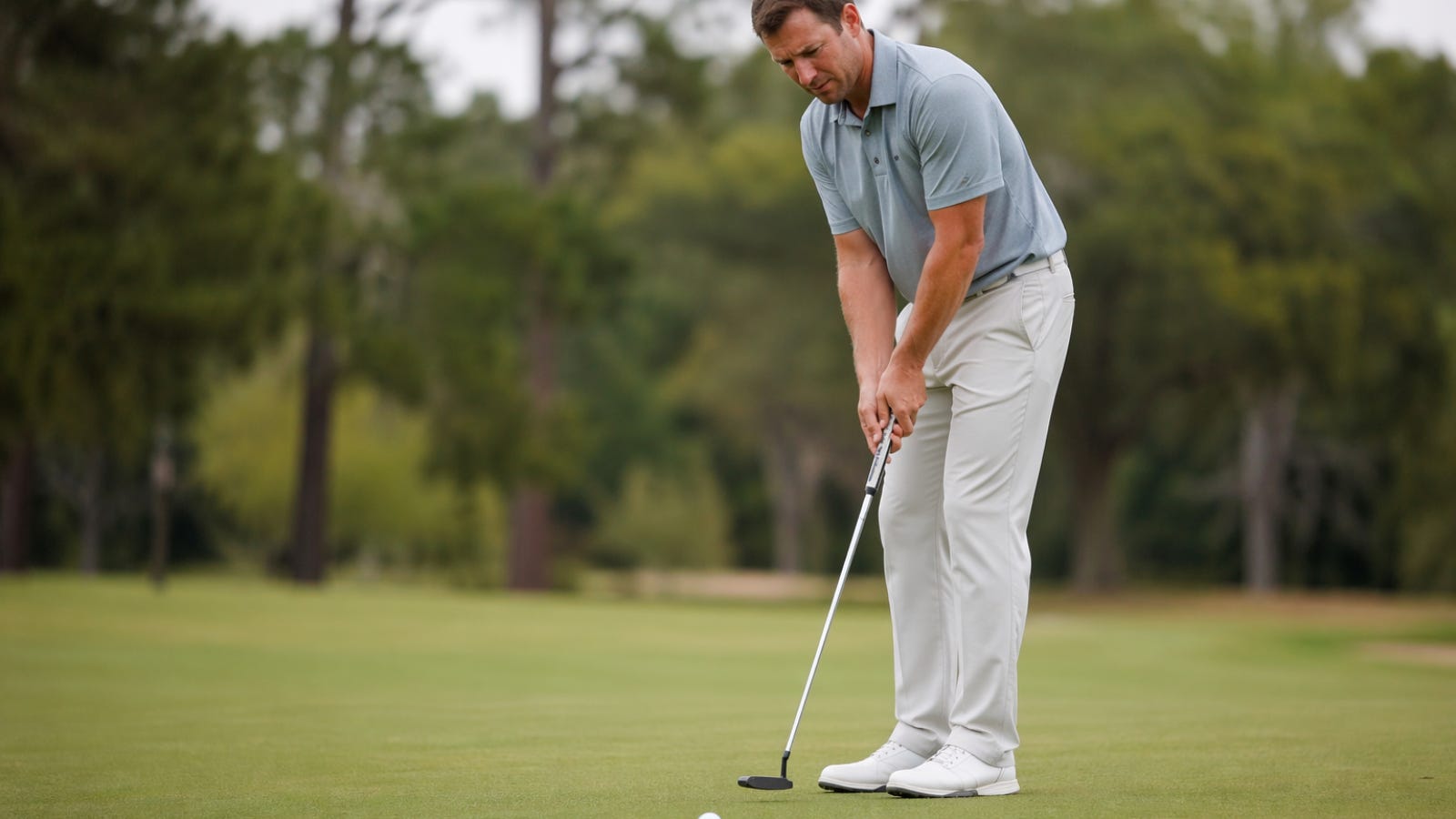
I know that sounds backwards, but stay with me. Put a cup in front of a seasoned player and pretty soon the whole drill becomes all about making the putt. The ball catches an edge and drops, so it feels like a great putt. Another one rolls right over the center but runs 4 feet past, and somehow that one feels surprisingly good too because the line looked nice.
Meanwhile, the thing we were supposed to be training—speed—gets pushed off to the side. I have done plenty of that myself. Hit a 30-footer, watch it scare the cup, and start moving the line a little bit just to see if I can make it.
A ghost hole changes the picture because there is nothing to make. You give the ball a place to roll through and, even more important, a place to finish. That last part is what I want you paying attention to in this session.
When you walk onto a different practice green, or a course where the greens are a little quicker than what you are used to, you need some way to get your eyes and your feel lined up with the surface. You do not need another technical thought about your putting stroke.
You need a way to build a picture, and the ghost hole gives you one.
What is a ghost hole? It is a flat, thin target disc placed on the green that simulates a real cup without obstructing the ball’s roll. You can make your own using four flat plastic markers; place one at the top, bottom, left, and right. The hole is 4.25 inches, anything close to that is perfect. You simply want the ball to roll through the ghost hole so you can measure finish distance.
Before you get into the full session, try this simple baseline drill. Make a ghost hole somewhere on the practice green and place a tee 3 feet beyond it. Go back about 20 feet and roll three balls.
Do not worry about “making it.” Simply watch what the ball does after it reaches the ghost hole.
Does it die before it gets there?
Does it arrive with good pace and settle in the window?
Does it run through the whole thing like the green surprised you?
Three balls will tell you quite a bit. The question is not whether you can hit the ghost hole.
Can you picture how much speed the ball should still have when it gets there?
