


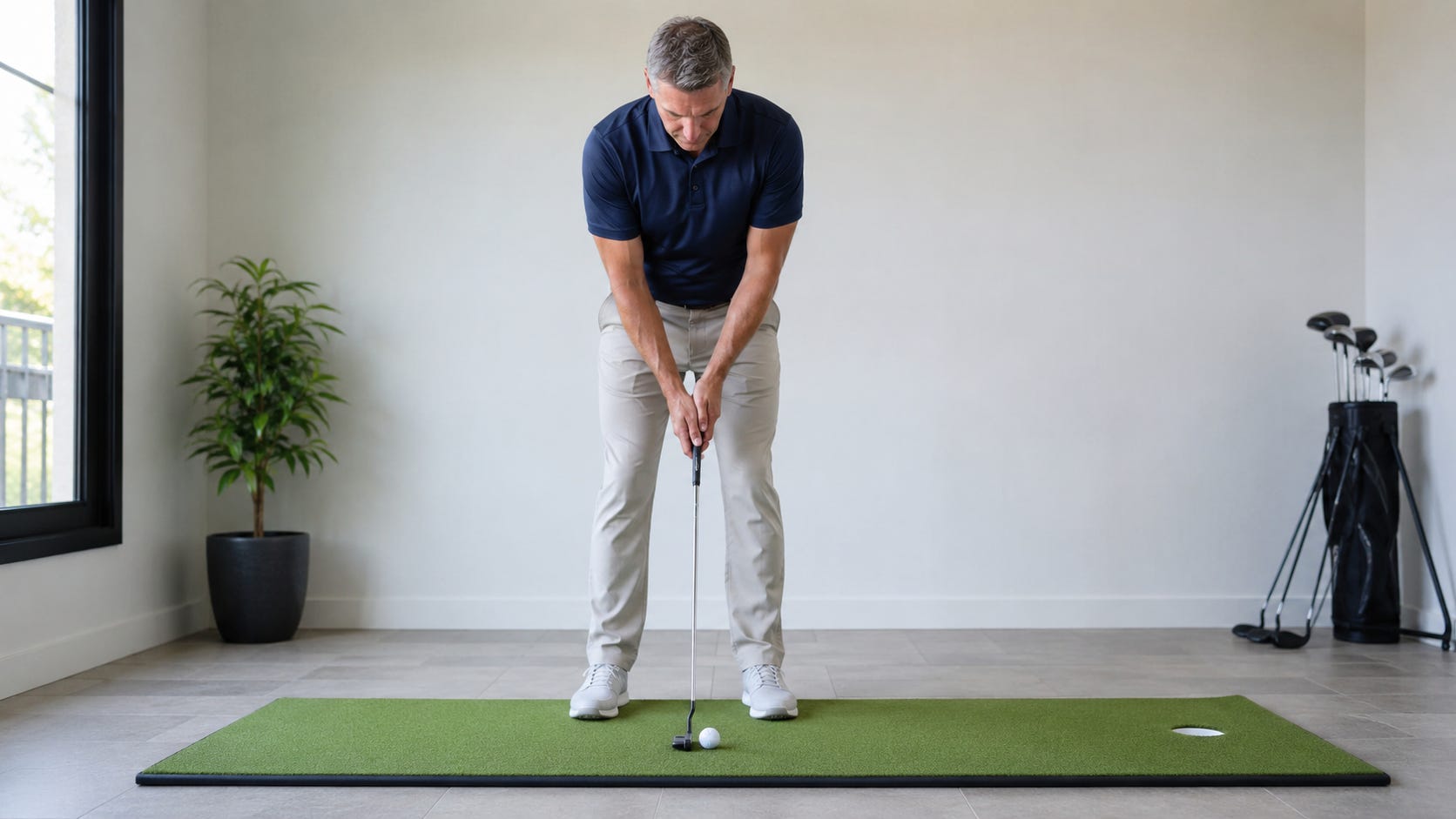
Most seasoned players want to fix the stroke first.
I understand why.
The stroke is what moves the putter.
The stroke is what strikes the golf ball.
The stroke is what gets blamed when the putt misses.
But the stroke does not begin when the putter moves.
It begins before that.
It begins with how you step in.
Where the ball sits.
Where your eyes settle.
How your feet find the ground.
How square your body feels to the line.
How balanced you are before the putter ever goes back.
That is why I like to train the putting setup before I ever ask a player to start working on the stroke.
Because the putting stroke will only be as good as the setup.
If the setup changes every time, the stroke has to keep making adjustments.
That is where the players mind gets busy.
One putt, the ball is too far forward.
Next putt, the stance is wider.
Next putt, the eyes are in a different place.
Next putt, the shoulders aim left.
Next putt, the weight is out on the toes.
Then the player wonders why the stroke does not feel free.
How can it feel free when it is trying to save a different setup every time.
Why Setup Belongs in Your At-Home Training
The setup is one of the best things you can train at home.
You do not need a perfect putting green.
You do not need a cup.
You do not even need to roll putts at first.
You need a putter, a ball, a flat piece of carpet or hard floor, and enough patience to make the same setup feel familiar.
That is the work.
Not exciting.
Not flashy.
But important.
A consistent setup gives your stroke a fair chance.
It gives your eyes a familiar look and your body a stable place to move from.
It lets you stand over the putt without checking five things before you pull the trigger.
That is where trust begins.
Setup Is Not Something to Fix on the Green
A lot of seasoned players wait until they are standing over a putt to check their setup.
That is too late.
The green is where you should be seeing the line, feeling the distance, and rolling the ball.
It is not where you want to be asking yourself:
Is the ball too far back?
Are my eyes over it?
Are my shoulders square?
Am I aimed right?
Is my weight forward?
Are my feet too wide?
That kind of thinking turns a putt into a small lesson.
And a small lesson is not what you need when you are trying to roll the ball and get the speed right.
At home, we can take those questions off the course.
We can train the setup until it starts to feel normal.
Then, when you get to the green, you are not trying to find your setup.
You are stepping into one you already know.
That is Blackout Mode.
Not blanking out. Not guessing. Not hoping.
Training the important pieces until they no longer need so much attention.
The Pieces We Are Training
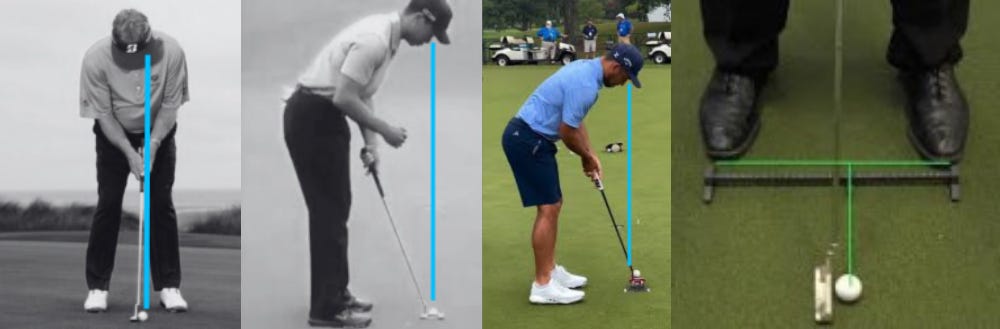
This putting setup session is built around five simple pieces from the Blackout Putter System setup chapter: ball position, eye position, stance width, square alignment, and grounded balance.
Each piece matters.
But you do not need to turn it into a science project.
You need to find your setup.
Then repeat it.
Ball Position
The ball needs to live in a familiar place.
A good starting point is just ahead of the putter’s sweet spot, often under the lead eye or near the lead ear.
The cue is simple:
Ball under the eye.
That does not mean every golfer has to look exactly the same.
It means you need a ball position you can find again and again.
Eye Position
Your eyes affect how you see the line.
Some golfers like the eyes directly over the ball.
Some like the eyes just inside the ball.
The key is not copying somebody else.
The key is discovering what lets you aim, strike, and roll the ball best.
Then stay with it.
You do not want to be deciding where your eyes belong during a round.
Decide it in training.
Stance Width
Your stance should feel natural.
If you widen after setting the ball position, your aim can shift to the right.
If you narrow after setting the ball position, your aim can shift to the left.
A good guide for many players is shoulder width apart.
But once you find it, keep it consistent.
A simple cue:
Same stance, every time.
Use a floorboard, tile line, mat, or small tape marks if you need to.
Do not be proud.
Good training often looks simple.
Square Setup
Putting is not just about the putter face.
The whole body has a say.
Feet.
Knees.
Hips.
Shoulders.
Forearms.
Eyes.
The more square and organized your setup is, the less the stroke has to save.
A straight putt starts before the putter moves.
Balance
Balance is quiet.
But you notice when it is missing.
If your weight is too much on your toes, tension creeps in.
If you are hanging back on your heels, the stroke can get lazy.
You want to feel grounded, centered, and athletic.
A simple cue I like:
Feel like you could dig your toes into the sand without falling forward.
That puts you in the ground.
A Simple Preview
The full session below walks you through a complete at-home putting setup practice.
It does not start with the stroke.
It starts with the foundation.
You will train:
Ball position.
Eye position.
Stance width.
Square alignment.
Balance.
Then the full setup sequence.
No rushing.
No overthinking.
No putting stroke lesson yet.
Just building the place your stroke can trust.
Paid members can use the full putting setup session below as this week’s Blackout putting assignment.
