


A note from me
I chose this as the first post in The Blackout Journal because it explains the difference behind everything we are going to be doing here.
I have spent more than my share of time grinding on a range. Always working on positions and repeating the same swing over and over again. Trying to hold onto the feel of the last good shot.
I believe there is value in this kind of practice. We need sound mechanics, and we need repetition to make a motion familiar. But there comes a point when another bucket of balls does not answer the real question:
Can you trust the motion when you only get one chance and the shot matters?
That is where practice ends and training begins. Most seasoned players practice, but very few train. That difference explains why so many experienced players can look good on the range and still feel uncertain over a scoring shot on the course.
They have built a motion but they have not yet trained themselves to trust it.
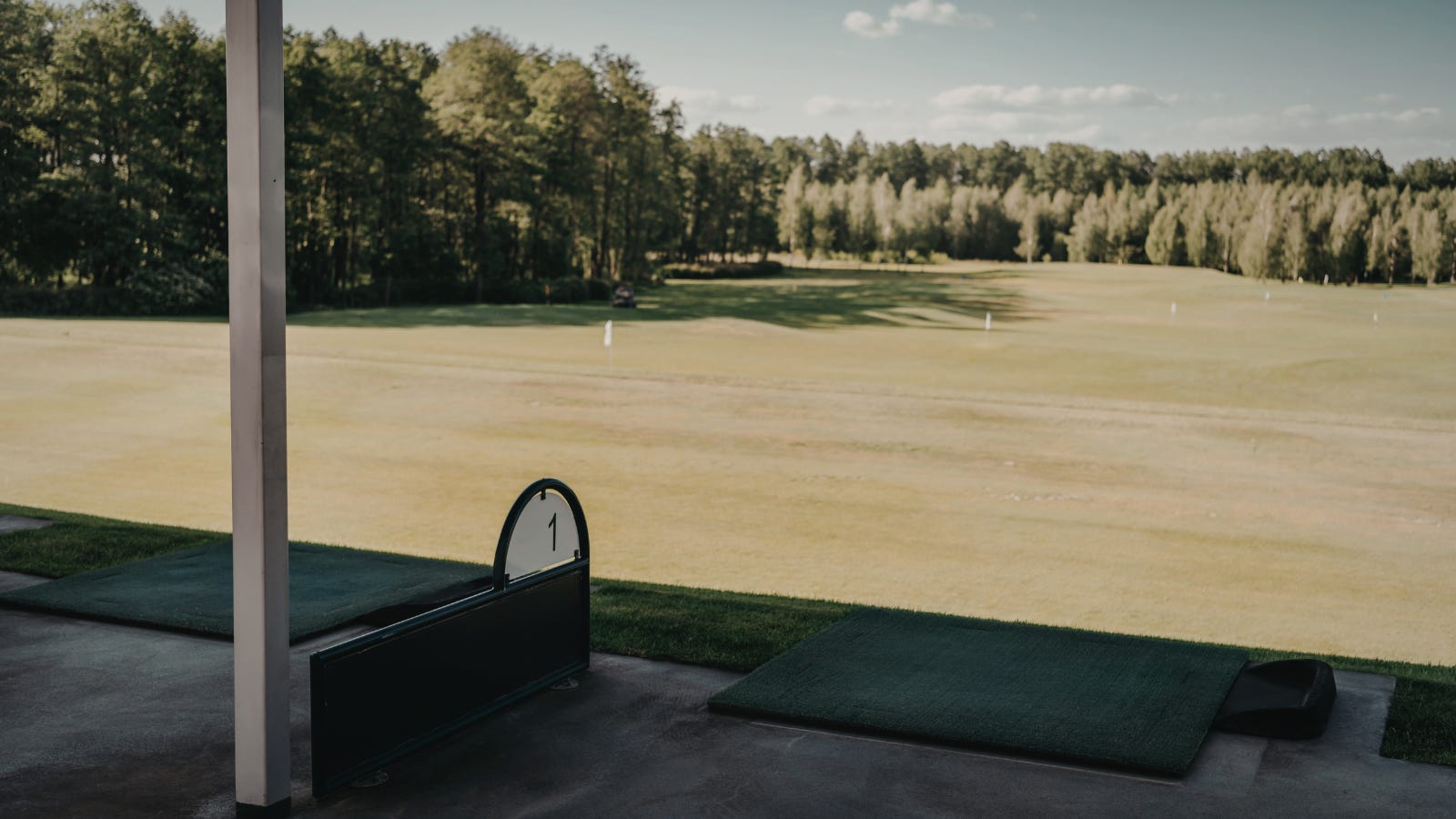
Practicing feels productive
I used to love the certainty of hitting the same 60-yard wedge over and that felt productive. I felt comfortable because the target stayed the same, the lie stayed the same, and I knew exactly what shot was coming next.
After a few swings, the body settled in. Then I would hit several good shots in a row and leave the range believing I had found something.
You probably know that feeling.
The shot comes off perfectly and you stop and think about what you did. You think about the backswing, the hands, maybe the tempo finally felt right. Then you try to repeat that thought on the next swing. Some days, you would hit 20 balls in row to the same 60-yard target.
Before long, you are no longer hitting a golf shot. You are trying to reproduce a feeling from three swings ago. That can work on the range because repetition gives you time to adjust.
The course does not give you that luxury. You get one ball, one distance, one lie, and one decision.
Then you have to pull the trigger.
Comfort can look like improvement
Practice is comfortable because it is predictable. You choose the shot or the range picks it for you. You are in control of the rhythm and you know what is coming next.
When the ball flies the right distance five times in a row, it is easy to believe you are becoming a better player. Don’t get me wrong, sometimes you are. But sometimes you are only becoming better at repeating that exact shot under those exact conditions. That is not the same as being ready to play on game day.
The course keeps changing the question. One wedge shot might be 72 yards from a clean lie while the next is 48 yards from light rough. Then you face a long putt across a slope after standing around for several minutes. There is no groove waiting for you on the golf course.
That is why comfort disappears so quickly when the scorecard matters.
Training is built for uncertainty
Training feels different than pounding balls on the range. Training asks you to make decisions because the distance and target are always changing… every shot.
You only get one ball instead of a pile. It requires a full pre-shot routine and a clear commitment.
Real training might look like this:
Choose a different target for every shot.
Change the distance after every repetition.
Use one ball whenever possible.
Go through your complete pre-shot routine.
Keep mechanical thoughts out of the final execution.
Accept the result and move on.
Now you are no longer rehearsing the same answer. You are learning to respond to a changing question.
That looks (and feels) much more like golf.
Practice builds motion. Training builds trust.
Practice does have a purpose. It helps you learn a grip, setup, stroke, swing length, or movement pattern. It gives you time to slow down and understand what the body is doing. It is all good stuff and it will help you.
But practice and training are not interchangeable.
Practice asks: How can I improve this motion?
Training asks: Can I use this motion without consciously controlling it?
Practice can build a swing that looks good on the range.
Training helps that swing appear when you are playing the 17th hole and the shot counts.
Practice improves technique.
Training prepares performance.
You need both—but you need to know which one you are doing.
The trap seasoned players fall into
The better you become at analyzing your swing, the easier it is to keep analyzing it. If you hit a good shot, you think about why it worked and you identify a feeling. Then you try to manufacture that feeling again. Soon, you are managing your body instead of seeing the target and playing the shot.
That can survive during repeated practice. It becomes much harder under pressure when the mind gets noisy, the body tightens. Your rhythm changes and feel disappears. The problem is distance control is usually one of the first things to go. And it may not be that your mechanics failed, imagine that.
The problem may be that you never trained yourself to use them without conscious supervision.
Where Blackout Mode fits
Blackout Mode is not about abandoning your mechanics. And it is not about closing your eyes, ignoring technique, or hoping instinct will take over.
It is about putting mechanical work in the right place. You learn and install the movement during practice and you make the motion familiar. Then you train it through changing targets, changing distances, full routines, and committed execution. Over time, you stop carrying instructions into every shot.
The work moves beneath conscious thought:
You see the target.
You feel the shot.
You commit.
You pull the trigger.
That is the purpose of Blackout Mode Training, not less preparation, just better preparation.
Practice protects you. Training exposes you.
Repeated practice can make you feel successful. You can discard the poor shots and keep hitting until the right feeling returns. Training does not hide as much because when you change targets every shot, you find out whether you can adjust.
When you use one ball, you find out whether you can commit. When you stop rehearsing mechanics, you find out whether you trust what you have built.
That can be uncomfortable, but it is also where the you begin to grow. Practice can protect the ego but training builds the seasoned player.
What to train this week
The next time you work on your wedges, do not spend the entire session hitting the same shot. Give yourself the first part of the session to practice. Use that time to settle your setup, make a few rehearsals, and reconnect with your basic motion.
Then finish with this simple training exercise.
The One-Ball Distance Change
Choose three targets at noticeably different distances.
For example:
Short - 28 yards
Medium - 54 yards
Long - 85 yards
Do this:
See the target, feel the distance, commit to the shot, and accept the result.
Go through your complete pre-shot routine before you pull the trigger.
Hit one ball to the short target.
Then change immediately to the long target.
Play to the medium target.
Continue changing the order for 10 shots.
Do use the same wedge for each shot.
Don’t do this:
Do not hit the same distance twice in a row.
Do not make a mechanical correction after every miss.
Your goal is not to hit all 10 shots perfectly. Your goal is to notice whether you can change distances without searching for a new swing thought.
When you finish, ask yourself:
Did I trust the motion, or did I try to control it?
That answer will tell you more than another pile of repeated shots.
A different way forward
If you have spent years grinding and still struggle to trust your scoring shots, you may not need to start over. You may not need another complete swing rebuild. You may need a better bridge between the motion you practice and the shot you are asked to play.
That bridge is training.
Inside The Blackout Journal, we are going to work on that transition. We will cover wedge distance control, putting speed, at-home movement training, practice structure, routines, feel, and the process of moving conscious mechanics into dependable motion.
The lessons will be practical and the training will have a purpose.
And you will always leave with one clear next step. Because the course does not care how good your swing looked during practice.
It reveals how well you trained.
Keep training,
Scott Alford
Golf Distance Control Coach
Creator of Blackout Mode Training
Train differently
The Blackout Journal is for seasoned golfers who have spent years working on mechanics but still want more trust when the shot counts.
Subscribe for practical wedge and putting distance-control training built to help you move from repeated practice to dependable performance.