


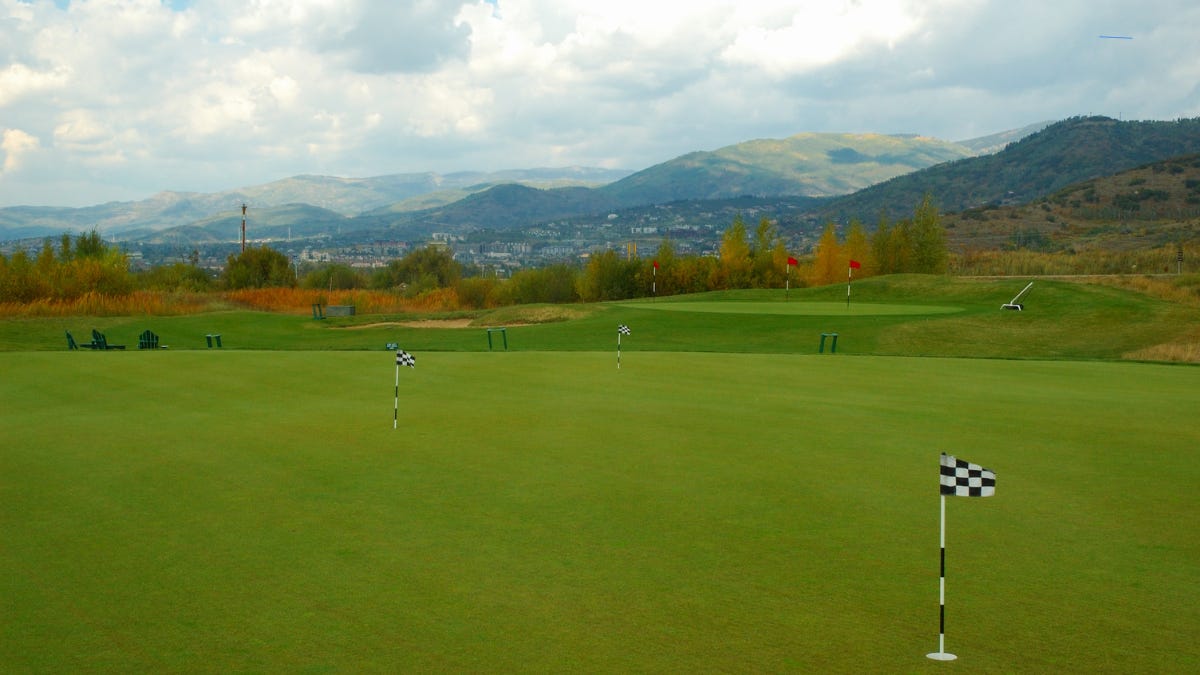
On the practice green, the first putt you hit from 30 feet might finish 6’ or more from the hole. Hit another with a much better roll on the ball, a little closer. Roll a third one and now you are somewhere around the hole. By ball five or six, you are starting to look like you have the speed figured out.
You know what I’m going to say. The problem is golf does not give you six cracks at it, you get one. You walk onto a green you have not practiced on, find yourself 32 feet away on a little downhill left-to-right breaker, and that first ball counts. The next hole might give you 18 feet straight uphill. Then 40 feet across a ridge.
You never get the same lag putt twice on the course, so I have never understood why so much green-speed practice is built around hitting the same putt over and over again. I get it, repetition has a place, but repetition can also fool you.
By the fifth ball, you are no longer solving the original problem. You are adjusting to what the last four balls taught you. That is different from walking onto a green and figuring out the speed with the first and only ball.
This session is built around training that first ball. The idea is simple: six putts, six different problems. All with different distance, different slope, and different line. One ball at each station and no mulligans just because you did not like the first one.
Before you get into the full session, try a quick baseline the next time you are on a practice green:
Pick six genuinely different putts.
Roll one ball from each location.
Keep only the first result.
Do not fix the stroke between balls.
Do not go back and replay the one you left short.
Just pay attention to the distance control and ask yourself one question:
Am I learning the speed of this green, or am I normally just learning from the ball I hit before?
That is what this session is going to find out.
